How to Price LED Neon Signs: Tube Length, Backer and Add-ons
· 3 min read
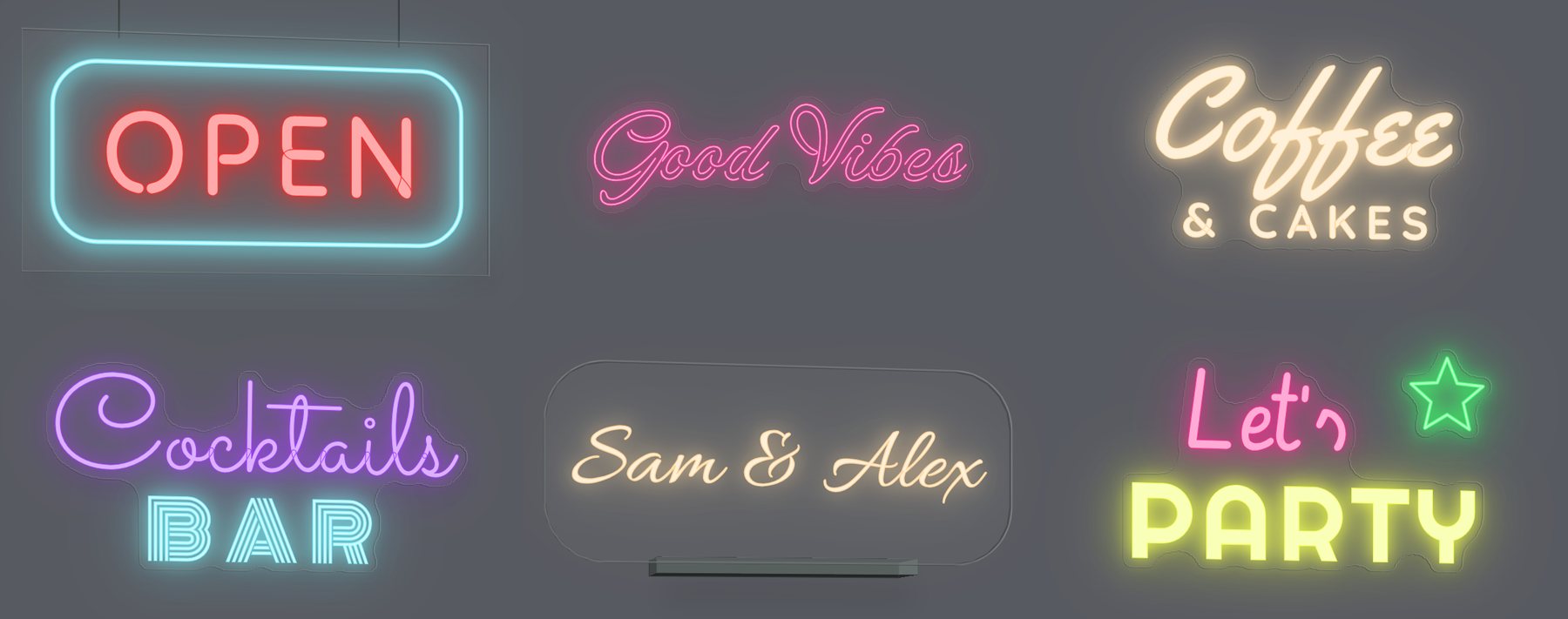
Short answer: price LED neon from its parts. Charge for the length of tube the lettering needs, add the backer by area, then add your rates for the options that cost you more, like RGB, outdoor sealing and a desk stand. A price built this way scales properly from a small name sign to a wide bar sign.
Plenty of shops price neon by eye, or with a flat price per size band. Both feel quick, but they leave money on the table for wordy script signs and overcharge for short, bold ones. Here is a method that holds up.
1. Tube length is the main cost
The tube is what you buy by the meter, and it is where most of the labor goes: bending, cutting and connecting. Two signs with the same outside size can use very different lengths of tube:
- "OPEN" in a bold single-line font uses little tube.
- "Good Vibes Only" in a looping script can use several times as much, at the same width.
That is why price per square inch alone misleads you with neon. Measure the tube, then charge a rate per meter.
If you measure by hand, trace the path of each letter, including any border or shape, and add a little for joins. In Sign Designer the estimate measures the tube straight from the customer's letters, so the number is there the moment they type.
2. Add the backer by area
The acrylic backer is a sheet cost plus cutting, so price it by area. Then decide whether the finish changes the rate. Clear and colored acrylic are the usual base. Mirror and printed acrylic cost you more and deserve a higher rate.
The shape matters too. A backer cut to follow the lettering takes more cutting time than a plain rectangle, rounded rectangle, pill or oval.
3. Charge separately for the options
Keep the options as their own lines, so the customer sees what each choice costs:
- RGB: tube that changes color with a remote or an app costs more than a single color. Charge it as an extra rate per meter.
- Outdoor sealing: IP67 tube for signs outside, again per meter. See IP65 vs IP67 LED neon for how to explain it.
- Desk stand: a fixed price per stand.
- Power adapter and extra cable: fixed add-ons, with a sensible quantity already filled in.
Per meter rates for RGB and sealing mean the extra cost grows with the sign. A flat outdoor fee is too much on a small sign and too little on a big one.
A worked example
These numbers are made up, to show the method only:
| Line | Example |
|---|---|
| Tube: 4.2 m at $60 per meter | $252 |
| Clear backer, cut to shape: 3 sq ft at $25 | $75 |
| Outdoor sealing: 4.2 m at $12 per meter | $50.40 |
| Power adapter | $35 |
| Estimate | $412.40 |
Swap in your own rates and the same sheet works for every neon job.
4. Set a minimum
Very small signs still take setup time. A minimum order price, or a minimum tube charge, stops tiny jobs from losing money.
Make the method do the quoting
Once you have rates, you do not need to work out each quote by hand. In Sign Designer you enter a rate per meter of tube, backer rates by area, and your per meter rates for RGB and outdoor sealing, plus a stand price. Customers design their neon sign on your website and see an estimate from your prices as they type. You still confirm the final price before invoicing.